
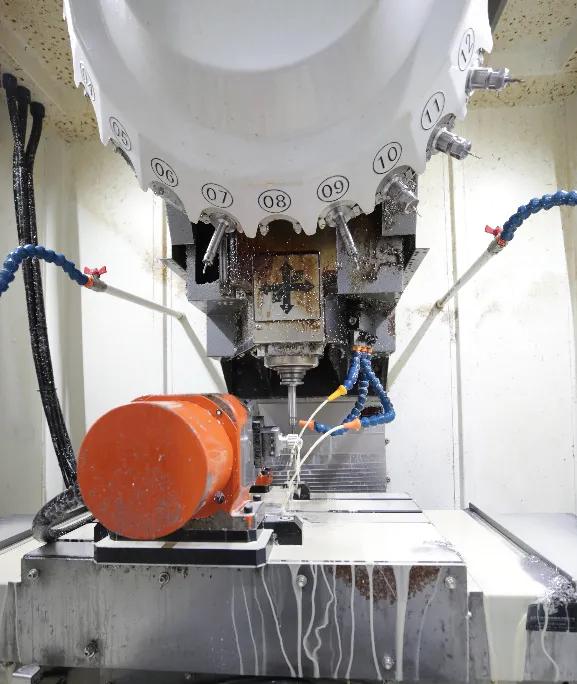
5‑axis CNC machining stands as one of the most popular multi‑axis manufacturing solutions for modern precision workshops. This article will explain the working principles, advantages and applications of 5‑axis machining, and compares the three mainstream machine configurations to help you make an informed decision.
What Do the Five Axes Mean in 5‑Axis CNC Machining?
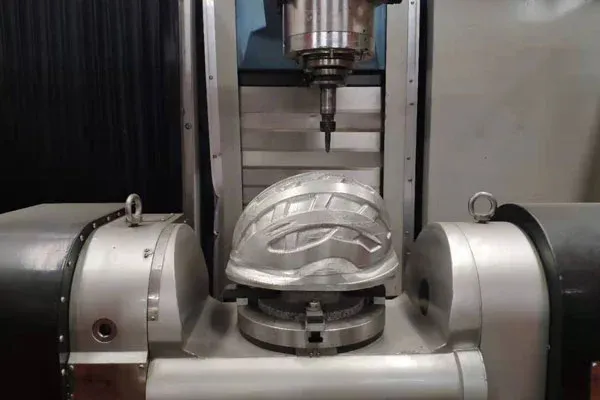
Unlike traditional 3‑axis machines, which move only in the X, Y, and Z linear directions, 5‑axis CNC machining adds two rotary axes, commonly A/B or B/C, enabling cutting tools or workpieces to move across five directions simultaneously.
1. X‑axis
The horizontal movement of the cutting head or spindle along the length of the workpiece, running left to right. It determines the machine’s ability to shape the width of the workpiece.
2. Y‑axis
Perpendicular to the X‑axis, this controls the front‑to‑back motion of the cutting head along the width of the workpiece.
3. Z‑axis
The vertical movement, controlling the up‑and‑down motion of the cutting tool. It determines the cut depth into the workpiece, which is crucial for creating intricate designs and complex geometries.
4. A‑axis
The rotational axis around the X‑axis. It enables rotation of the workpiece or cutting tool, which is pivotal for cylindrical or rotational machining tasks.
5. B‑axis
The rotational axis around the Y‑axis. It allows the machine to tilt the workpiece or cutting tool, facilitating multi‑sided machining and angled cuts.
How Does 5‑Axis CNC Machining Work?
The core principle of 5‑axis machining lies in the coordinated movement of all five axes, which can position the cutting tool or workpiece in virtually any orientation. The CNC controller simultaneously commands all five axes to move, allowing the tool to maintain an optimal cutting angle relative to the workpiece surface throughout the entire machining process.
In practical terms, a 5‑axis machine can approach a part from any direction without requiring the operator to reposition the workpiece manually. This capability is made possible by advanced CNC functions such as RTCP (Rotational Tool Center Point programming), which automatically compensates for the rotation of the tool or workpiece, keeping the tool tip at the programmed position regardless of how the axes move.
There are two primary operating modes for 5‑axis machines:
- Continuous 5‑axis (simultaneous 5‑axis): All five axes move continuously during the cut. The tool orientation constantly changes to maintain the ideal contact angle with the surface. This is required for parts with free‑form surfaces, such as impellers, turbine blades, and deep‑cavity mould cores.
- 3+2 positioning (indexed 5‑axis): The two rotary axes tilt the workpiece to a fixed angle and lock in place. The actual cutting is performed using only the three linear axes, similar to a 3‑axis mill but on an angled face. This covers roughly 80% of multi‑sided work and is suitable for parts that need machining on five different faces.
Comparison of Three Mainstream 5-Axis Machine Configurations
Machine Configuration | Working Description | Mechanical Strengths |
Swivel-Head (Head-Head) | Rotary axes reside entirely on the spindle assembly. The cutting tool tilts while the worktable and workpiece remain static. | Accommodates massive, heavy workpieces without weight limits on the rotary table or dynamic inertia issues. |
Trunnion Table (Table-Table) | Both rotary axes are integrated into a tilting, rotating table (rocking cradle). The spindle moves purely linearly (X, Y, Z). | Exceptional mechanical rigidity, high angular positioning accuracy, superior vibration damping, and maximum undercut access. |
Mixed Type (Head-Table) | Rotary duties are split: one rotary axis sits on the spindle head, while the second is embedded in the rotating worktable. | Balances stroke flexibility with load-bearing capacity, eliminating extreme tilt angles on a single mechanism. |
Key Advantages of 5‑Axis CNC Machining
1. Single Setup Machining
A 5‑axis CNC machine allows even the most complex parts to be completed in a single clamping operation. The ability to approach the workpiece from multiple angles eliminates the need for multiple fixtures and re‑positioning. This approach drastically reduces setup time and eliminates the cumulative errors that typically arise from repeated manual repositioning between operations.
2. Machining Complex Geometries
Complex curved surfaces and intricate shapes can be produced efficiently with 5‑axis technology. Parts such as impellers, turbine blades, and deep‑cavity mould cores often cannot be manufactured using conventional 3‑axis methods. The additional rotary axes provide the necessary freedom to reach difficult areas that would otherwise remain inaccessible with standard machining approaches.
3. Superior Surface Finish and High Precision
The continuous adjustment of the cutting tool’s orientation ensures an optimal contact angle with the workpiece throughout the entire machining process. This consistent engagement results in smoother surface finishes and tighter dimensional tolerances. The improved cutting conditions also reduce vibration and tool wear and extended tool life.
Applications for 5-Axis CNC Machining
1. Aerospace & Defense
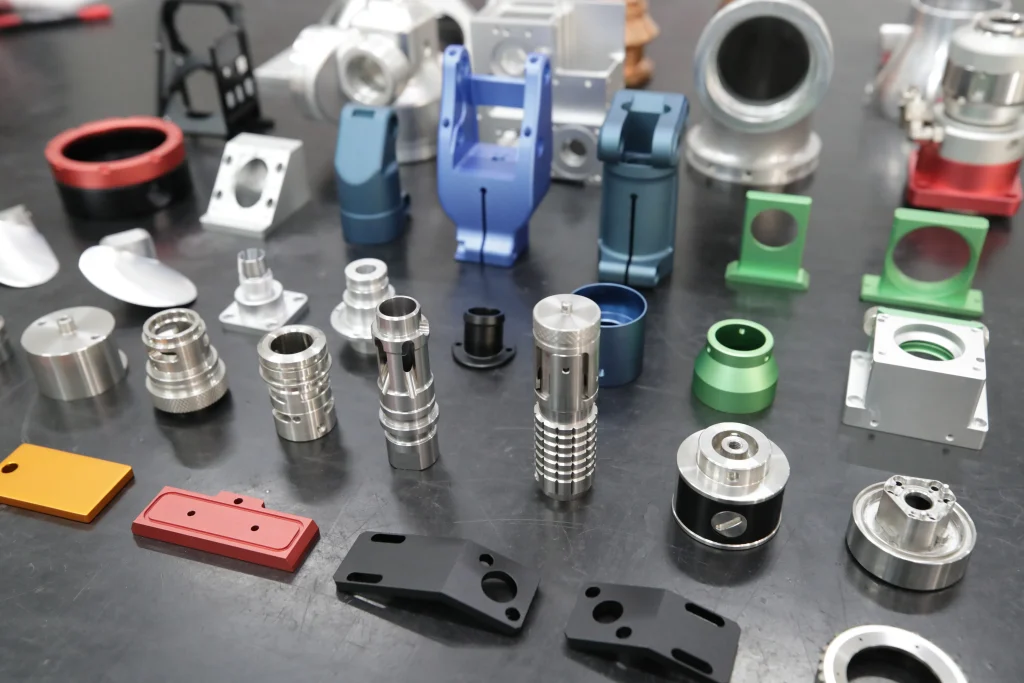
Engine impellers, turbine blades, blisks, and structural frames manufactured from tough alloys (such as Titanium and Inconel) require tight tolerances, organic 3D curves, and zero margin for error.
2. Medical Implants & Devices
Joint replacements, knee components, bone plates, and surgical instruments demand flawless biocompatible surfaces and tight dimensional accuracy. Single-setup production prevents cumulative clamping errors.
3. Automotive & EV Manufacturing
EV motor casings, lightweight battery trays, compressor wheels, and performance cylinder heads are increasingly machined on 5-axis equipment to minimize total weight, cut cycle times, and reduce assembly steps.
4. Precision Molds & Dies
Injection mold cores, high-cavity die inserts, and deep-rib optical molds benefit from tilted 3+2 tool paths, reaching deep, narrow cavities without requiring slow, multi-step Electrical Discharge Machining (EDM).
5. Robotics & Energy Sector
Multi-axis robot arm articulation joints, precision gear housings, and power-generation turbine components require optimal strength-to-weight ratios and high-concentricity multi-angle machining.
Conclusion
Understanding the five axes of a CNC machine is the first step toward leveraging the full potential of 5‑axis machining technology. The working principle centres on coordinated simultaneous movement of all five axes, enabling single‑setup machining of complex geometries with superior precision and efficiency.
Hongwen delivers prototypes through to bulk production for aerospace, medical, automotive, robotics and power‑generation industries. And its engineering team evaluates every drawing carefully to select the most suitable processing strategy. If you need, you can contact it.
